As new energy vehicles accelerate their evolution towards intelligence and autonomous driving, the domain controller, as the vehicle's "super brain," is becoming increasingly prominent. It is responsible for centrally processing data and logical tasks from core functional domains such as autonomous driving, body control, and the powertrain system. Especially in L3 and above autonomous driving scenarios, it undertakes the critical missions of sensor data fusion, algorithm operation, and decision control, directly determining the vehicle's driving safety and intelligent experience. It is also a core component that must be prioritized during the assembly process of new energy vehicle domain controllers.
Alongside the explosive growth of the domain controller market – the Chinese market size reached 93.4 billion yuan in 2024 and is expected to exceed 168.89 billion yuan by 2026 (citing industry research report: China Commercial Industry Research Institute's "2025-2030 China Automotive Electronics Industry Development and Investment Strategy Research Report") – the industry is entering a critical phase of mass production. However, at the same time, numerous pain points in the domain controller assembly process have become bottlenecks restricting high-quality industry development. This involves screw connections for various components like PCBA boards, wiring harnesses, IGBTs, and aluminum housings. From automatic screw feeding to final tightening, every step demands high precision, efficiency, and reliability. Traditional domain controller assembly methods can no longer meet the industry's needs, creating an urgent requirement for professional new energy vehicle domain controller assembly solutions.
Three Core Pain Points in New Energy Vehicle Domain Controller Assembly
The assembly quality of domain controllers directly affects the stability of the vehicle's electronic and electrical architecture. During actual mass production, due to factors such as complex product structures, fast production tact times, and mixed-model production lines, three core pain points are particularly prominent. They significantly impact domain controller assembly efficiency and product reliability, becoming key obstacles to the mass production of new energy vehicle domain controllers.
Pain Point 1: Frequent Floating Screws, Hiding Safety Hazards
As the "neural center" hardware base of the domain controller, the PCBA board carries high-performance chips and various electronic components. The quality of its screw tightening directly determines the operational stability of the domain controller and is a core control link in the assembly process. However, during domain controller assembly, PCBA board screw tightening is prone to "floating screw" issues. Screws that appear tightened may not actually reach the standard clamping force. This not only affects the connection reliability between the PCBA board and other components but can also lead to poor contact, abnormal signal transmission, and in severe cases, domain controller failure, directly threatening overall vehicle driving safety. This is one of the most prominent quality pain points in current domain controller assembly.
Pain Point 2: Manual Operations Are Error-Prone, Compromising Efficiency and Quality
The wiring harness tightening station for domain controllers, due to limited operating space and numerous points, still relies heavily on manual labor for many steps. Manual operation is also a major shortcoming in the domain controller assembly process. Manual tightening is not only inefficient, making it difficult to meet the fast-takt requirements of mass production, but also prone to operational errors like double tightening or missing tightening. These seemingly minor errors can lead to loose wire harness connections, affecting signal transmission stability, while also increasing subsequent rework costs and creating serious quality risks, contradicting the trend towards automated and intelligent domain controller assembly upgrades in the NEV industry.
Pain Point 3: Difficulty Feeding Coated Screws, Slowing Down Production Takt
To enhance the sealing performance and connection reliability of domain controllers, some screws are designed with pre-applied adhesive or oil. However, during the automatic feeding of such screws for domain controller assembly, the glue or oil can easily contaminate the feeding rail, leading to slow feeding speeds or screw jamming. Jamming not only interrupts the assembly line process, affecting production tact, but can also damage screws and block rails, increasing equipment maintenance costs. This becomes a major obstacle to the mass production of domain controllers and an efficiency pain point urgently needing resolution in the assembly process.
Danikor Intelligent Assembly Solutions: Comprehensive Solutions to Domain Controller Assembly Challenges
Addressing the core pain points of domain controller assembly, Danikor, deeply engaged in the field of intelligent automotive assembly and leveraging years of accumulated technology in intelligent tightening and automatic screw feeding, specifically proposes a complete intelligent assembly solution for new energy vehicle domain controllers. Focusing on three dimensions – improving floating screws, controlling manual stations, and feeding coated screws – it achieves high precision, high reliability, and high efficiency in domain controller assembly, safeguarding mass production for the industry and helping enterprises improve assembly quality and efficiency.
Intelligent Error-Proofing + High-Precision Control, Completely Improving Floating Screw Issues
Targeting the frequent floating screw problem in domain controller assembly, Danikor utilizes sensor-based tightening tools. Through built-in high-precision torque sensors, they monitor torque changes in real-time during the tightening process. Combined with a clamp torque control strategy, they precisely control the tightening force for each screw, addressing floating screw issues at the source and ensuring reliable tightening quality for domain controller assembly, perfectly matching the stringent precision requirements.
Simultaneously, the system features built-in, comprehensive tightening error-proofing control functions. A one-click activation enables fault detection mode, covering floating height detection, thread stripping detection, and re-tightening detection. This significantly lowers the threshold for strategy configuration, achieving full-process error-proofing for domain controller assembly without requiring specialized personnel, effectively enhancing assembly process stability. This solution boasts high precision with 6σ accuracy of ±5% across the full torque range, supports various advanced tightening strategies like clamp torque, yield point, and synchronous tightening, ensuring each screw achieves optimal clamping. It also accommodates multiple communication protocols like OP, bus, and TCP/IP, flexibly adapting to interaction needs with different equipment and the assembly requirements of diverse domain controller types, facilitating efficient assembly of various domain controllers.
Full Closed-Loop Control for Manual Stations, Eliminating Human Operational Errors
To address the pain points of manual tightening stations in domain controller assembly, Danikor introduces assembly guidance systems, paired with counting-type barrel screw feeders and positioning arms, achieving closed-loop control throughout the process from screw feeding and positioning to tightening. This allows manual stations to also achieve standardized and intelligent operation, solving the shortcomings of manual domain controller assembly.
The assembly guidance system features a graphical visual interface and standardized process guidance, making operation intuitive and easy. It supports connection to multiple external devices, regulating the operator's assembly procedures through system logic closed-loop control. The positioning arm pre-sets the XYZ coordinates of tightening positions, enabling sequential screw tightening, fundamentally avoiding errors like wrong or missing tightening. The counting-type barrel screw feeder has a counting material-loading function, precisely managing screw quantity and preventing missing tightening or dropped screws. This solution not only effectively avoids human operational errors in domain controller assembly but also enables real-time collection of tightening data, achieving traceability of key data, providing strong support for quality control and process optimization in domain controller assembly.
Stepped Screw Feeding Technology, Enabling Smooth Transport of Coated Screws
To solve the feeding difficulties of screws with pre-applied oil or adhesive in domain controller assembly, Danikor uses stepped screw feeders. Combined with special rail treatment and control logic optimization, it effectively reduces contamination of the feeding rail by glue or oil, solves the problem of slow feeding, and ensures smooth operation of the domain controller assembly line. Furthermore, the feeder rail utilizes adaptive technology to ensure stable screw alignment and feeding speed. The screw separator comes standard with a position detection function, enabling closed-loop control of action logic, effectively avoiding jamming faults caused by incorrect screw cutting, further improving domain controller assembly efficiency.
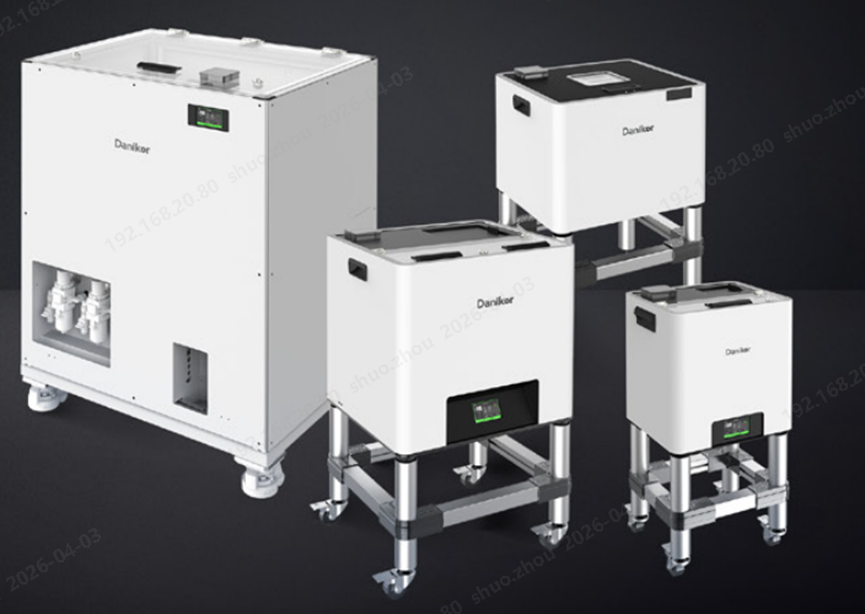
This feeding solution achieves an extremely low screw jamming rate, as low as 1/20,000 for standard screws, effectively ensuring feeding tact and assembly line efficiency. It also meets the contamination-free assembly requirements for electronic-type screws, preventing screw contamination from affecting sensitive precision components inside the domain controller. Additionally, various expansion function modules can be configured, allowing flexible upgrades to the feeding solution based on on-site domain controller assembly production needs, adapting to the feeding requirements of different specifications and types of coated screws, and fitting multi-model domain controller assembly scenarios.
Danikor consistently focuses on intelligent tightening and automatic screw feeding technology, deeply cultivating the field of intelligent automotive assembly. With its comprehensive domain controller assembly solution, Danikor helps enterprises solve core pain points like floating screws, missed tightening, and screw jamming, achieving dual improvements in assembly efficiency and product quality for domain controllers, and driving the upgrade of the new energy vehicle intelligent driving industry.
From reliable tightening of each screw to full-process quality traceability, Danikor places technological innovation at its core, providing solid support for the large-scale, high-quality production of new energy vehicle domain controllers. It helps the industry break through assembly bottlenecks, promotes the continuous upgrading of the intelligent driving industry, and injects new momentum into the development of the domain controller assembly industry.