Precision Assembly Screw Tightening Solution for Optical Modules | Danikor Digital Intelligent Tightening Tools
As the core carrier connecting computing power, networks, and data, optical modules are continuously evolving towards higher speeds, greater integration, more compact sizes, and enhanced reliability. Under this trend, screw assembly is no longer just a basic connection process but has become a critical link affecting product reliability, heat dissipation performance, and manufacturing yield.
.png "/uploads/image/2026/08/19/1787115323918953/1 (7).png")
I. Core Pain Points in the Screw Tightening Process for AI Optical Module Assembly
Difficulty in Controlling Small Torque, Prone to Component Damage: Optical modules commonly use small M1 to M3 screws, demanding extremely high tool control precision. Conventional electric screwdrivers are prone to torque overshoot under low-torque conditions, leading to defects such as stripped threads, cracked housings, and damaged optical components. This directly results in the scrapping of high-value products. Precise control within the low-torque range is the primary technical challenge in optical module assembly.
Strict Requirements for Assembly Consistency, Difficulty in Ensuring Batch Stability: Critical stations like PCBA fastening and heat sink installation require high consistency in clamping force. Even minor torque fluctuations can affect the product's heat dissipation efficiency and long-term operational reliability. Traditional tools lack the refined process control capabilities needed to guarantee assembly consistency across batches, often leading to yield fluctuations.
Multi-Model Mixed-Line Production, High Changeover Efficiency and Management Pressure: With the accelerating iteration of optical module products, multi-model mixed-line production has become the industry norm. Different screw specifications, torque parameters, and process requirements often coexist. Traditional assembly methods rely on manual parameter switching, which is inefficient and error-prone, placing higher demands on the production line's flexible changeover capability and digital management level.
Narrow Housing Space, Limited Layout for Automated Dual-Axis Tightening: AI optical module housings are highly integrated, with screw positions typically spaced less than 40mm apart. To increase production cycle time, automated workstations often use two tools for simultaneous tightening. However, traditional tightening tools are generally too large in size to meet the parallel layout requirements of dual tools, thus restricting the efficiency improvement of automated production lines.
Manual Assembly Prone to Errors, Lack of Quality Traceability: In manual assembly scenarios, issues such as dropped screws, missed tightening, mixed materials, and incorrect tightening are frequent. Furthermore, worker fatigue increases during prolonged, high-intensity operations, further impacting assembly stability. Simultaneously, traditional tools lack data acquisition and uploading capabilities. The tightening process cannot be monitored, and results are not traceable. When quality problems occur, it is difficult to pinpoint the root cause, hindering refined management of the production process.
II. Danikor's Digital Intelligent Tightening Solution
To meet the evolving precision assembly needs of high-speed optical modules, Danikor leverages its digital intelligent tightening technology. With high-precision, high-consistency, and traceable assembly capabilities, it builds a stable and reliable quality assurance system for AI optical module manufacturing.
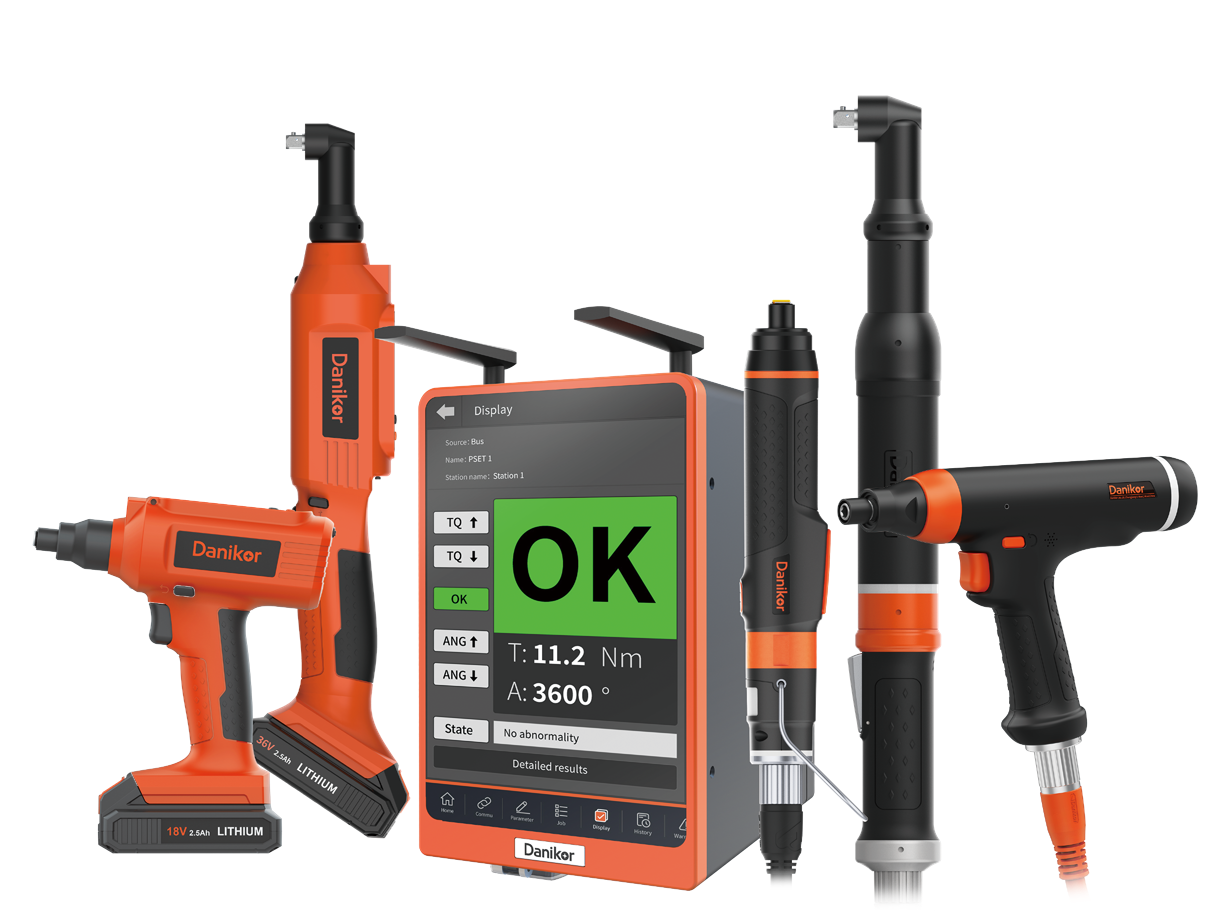
Sensor-Based High-Precision Tightening Tools, Precise and Controllable Small Torque: Danikor's sensor-based tightening tools are equipped with high-performance brushless motors and utilize a self-developed high-precision control algorithm to achieve 6σ ±5% torque control accuracy. They maintain consistent torque output even under low-torque conditions, with durable and reliable performance. The tools support multiple tightening strategies, enabling refined control over the entire tightening process. By reducing speed during the final tightening stage, they effectively prevent torque overshoot, ensuring each screw reaches a stable and consistent assembly state, reducing the risk of stripped threads and component damage.
Task Recipe Management, Rapid Adaptation to Multi-Model Mixed-Line Production: To address the multi-specification mixed-line production scenario for optical modules, the tools support task recipe management and rapid changeover. Process parameters for different screw types can be pre-stored. During production, the corresponding recipe can be called with a single key, enabling rapid switching between different screw specifications and torque requirements. This significantly shortens changeover time, enhances production line flexibility, and adapts to the rapid iteration needs of the AI optical module industry.
Full-Process Data Traceability, Building a Digital Quality System: The tools possess comprehensive data acquisition, uploading, and storage capabilities, ensuring that the tightening process of every screw is monitorable and the results traceable. Enterprises can analyze tightening data to assess assembly quality trends, promptly detect process anomalies, and drive the digital and intelligent upgrade of the entire AI optical module assembly process, moving from merely "completing assembly" to "precise and controlled assembly."
Compact Structural Design, Breaking Through the Limitations of Dual-Axis Tightening in Narrow Spaces: Danikor's sensor-based tightening tools feature a highly compact structural design, meeting the parallel layout requirements for dual tools and effectively adapting to high-density assembly conditions with screw pitches less than 40mm. The combination of high-precision torque control and a compact form factor further enhances assembly efficiency and consistency in automated mass production, providing crucial support for automated AI optical module assembly.
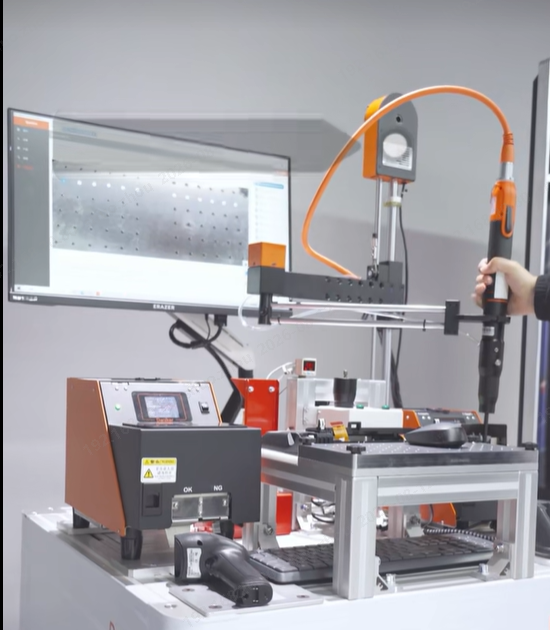
Closed-Loop Control Solution for Manual Assembly, Full-Process Error and Leak Prevention: For manual assembly scenarios, Danikor provides a comprehensive solution consisting of a highly stable feeding system, high-precision tightening tools, and a positioning arm. This achieves closed-loop control across the entire process, from screw conveying and positioning to tightening:
Feeding Stage: The roller-type screw feeder supports multiple feeding modes such as hand-pick, hand-scoop, and hand-suction. It effectively resolves on-site issues like dropped screws, missed tightening, and mixed materials, ensuring orderly screw supply.
Positioning Stage: The positioning arm supports XYZ coordinate presets and tightening sequence control, avoiding assembly risks like incorrect or missed tightening. It also effectively reduces operator fatigue under high-frequency, high-cycle conditions, ensuring assembly stability during extended operations.
Tightening Stage: The high-precision tightening tools ensure that the torque of every screw is precisely controllable, with data uploaded in real-time for complete traceability.
Danikor will continue to deeply cultivate digital intelligent assembly technology. With higher precision, greater stability, and more intelligent digital tightening solutions, we are committed to helping AI optical module manufacturing advance to a new stage characterized by high yield, high consistency, and high reliability.