In motorcycle manufacturing and engine component manual assembly workshops, bolt tightening is a fundamental operation throughout core processes such as cylinder, crankcase, cylinder head, and chain chamber assembly. The motorcycle engine is a precision power component, and its critical bolts have extremely high requirements for tightening torque, tightening angle, and fastening consistency. High-torque handheld tightening equipment is essential for completing these fastening operations.
However, traditional handheld tightening tools commonly suffer from an unavoidable physical shortcoming: the moment the tool reaches the set torque, it generates a very strong instantaneous reaction torque, which is directly transmitted in reverse to the operator's wrist and arm. Under long-term, repetitive, high-intensity tightening operations, workshop workers commonly experience three major industry-wide issues:
End-of-Operation Hand Tremors: The instantaneous torque impact causes hand tremors, making bolts prone to cross-threading or misalignment, damaging the engine's precision threaded holes and increasing the scrap rate of components.
High Incidence of Occupational Wrist Strain: Enduring high-frequency counter-impact forces daily leads to a high incidence of occupational diseases like tenosynovitis and carpal tunnel syndrome among assembly workers, resulting in persistently high employee turnover rates.
Imbalance Between Efficiency and Precision: Workers are forced to slow down due to hand fatigue. Traditional tightening tools have limited speeds. Additionally, human hand tremors combined with the tool's impact errors lead to significant deviations in engine bolt tightening torque and poor assembly consistency across batches. This creates quality risks such as engine oil leaks, air leaks, and abnormal operational noise.
Many assembly workshops have tried measures like replacing cushioned handle covers, optimizing working postures, and implementing station rotation to alleviate hand fatigue. However, these methods cannot eliminate the physical root cause—the instantaneous torque reaction from high-torque tightening. They only provide temporary fatigue relief and cannot fundamentally solve the problems of hand tremors and wrist strain during tightening. To fundamentally avoid hand tremors when driving screws and reduce the risk of occupational diseases for workers, the core solution is to adopt a low-reaction pulse tightening tool that breaks away from traditional impact working logic—the Danikor TCP wired pulse tightening tool. Paired with the CM series controller to set up an intelligent tightening station, it can adapt to the full range of manual tightening needs in motorcycle engine assembly, including high/low torque, high precision, and confined spaces.
II. Danikor TCP Wired Pulse Tool: Precisely Adapted for Motorcycle Engine Assembly
Low-Reaction Design: Stable One-Handed Operation Without Strain, Eliminating Work Fatigue
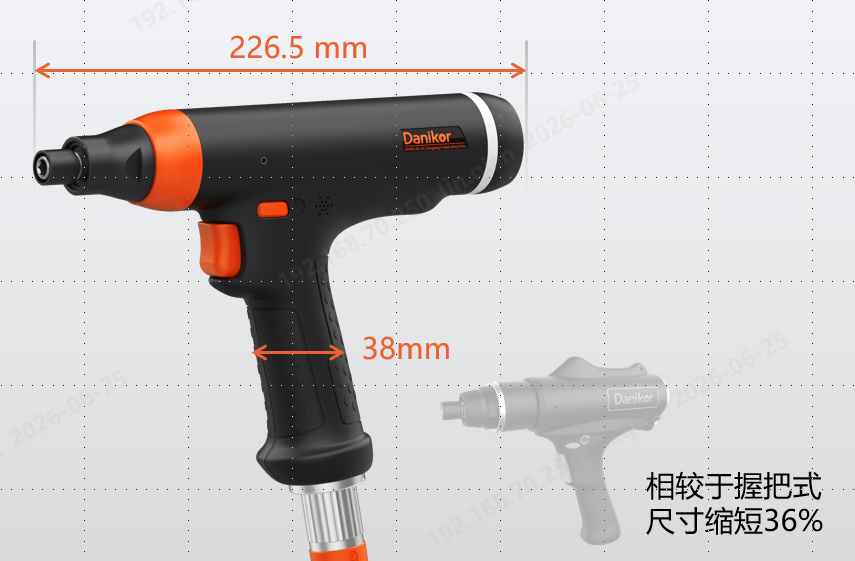
Thanks to its pulse mode, workers can stably control the tool with one hand throughout the entire process, without needing extra effort to counter the reaction force. Paired with an ergonomically designed, integrated compact body and a handle curve that fits the natural grip, even after completing thousands of engine bolt tightening operations in a single day of continuous high-intensity work, workers' wrists will not experience soreness or numbness. This fundamentally reduces the risk of wrist occupational diseases and avoids assembly defects caused by hand tremors.
High-Speed Motor: Increased Tightening Speed, Significantly Improving Production Line Cycle Time
Motorcycle engine assembly lines have strict requirements for operational tact time; station waiting directly hinders the entire line's production capacity. The TCP series is equipped with a high-performance, high-speed motor. The compact body houses powerful drive components, achieving a maximum cycle time improvement of 100%. It quickly completes bolt fastening at multiple positions like the cylinder head and crankcase, effectively reducing the operation time per station and efficiently adapting to automated, linked assembly lines.
Intelligent Data Traceability: Paired with CM Controller to Create a Compliant, Smart Assembly Station
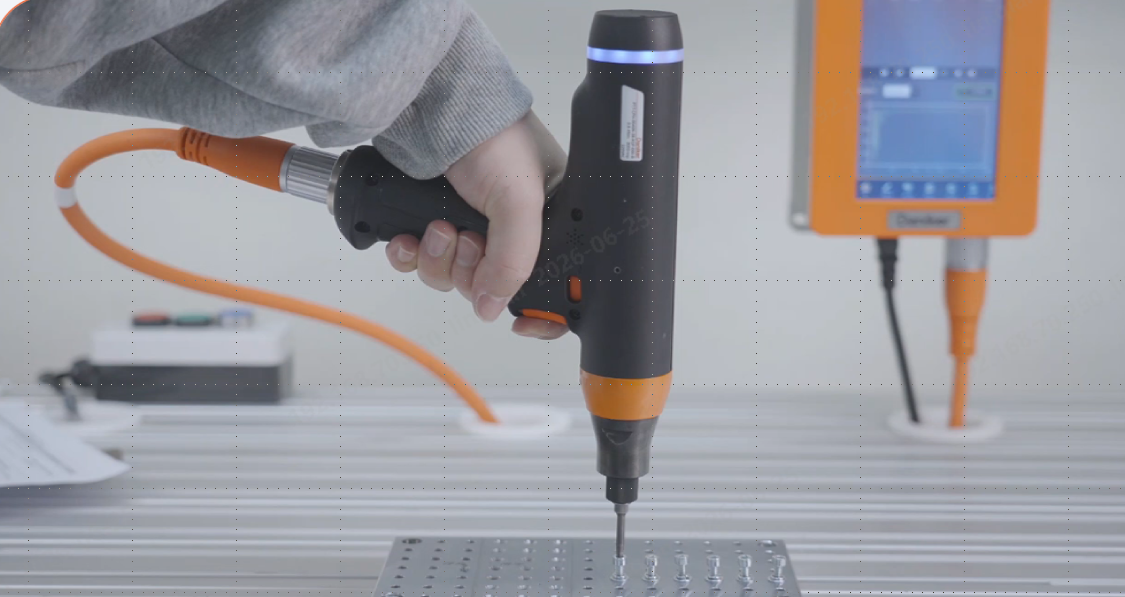
Motorcycle OEMs generally require complete traceability of assembly data to meet quality inspection, after-sales traceability, and industry quality control audit requirements. The TCP wired pulse tool, linked with the CM series controller, collects real-time, full-dimension data for every tightening operation, including torque value, angle, and tightening time. This data is stored and uploaded to the line system, enabling one-click traceability of tightening data. This eliminates the quality control blind spots of traditional manual tightening, which lacks data and makes accountability difficult, helping factories establish standardized, digitalized tightening stations.
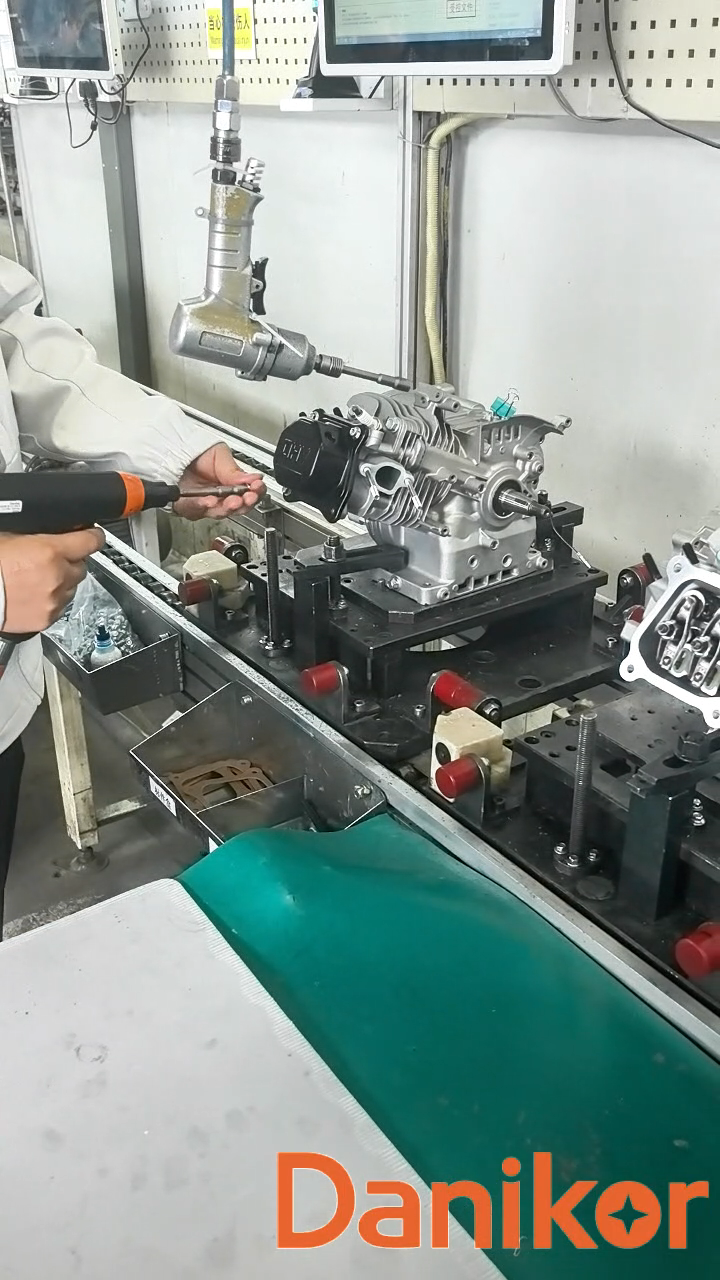
In the precision assembly scenario of motorcycle engines, the issues of workers' hands trembling when using handheld tightening tools and resulting wrist strain from long-term work are never about operator proficiency. They are common industry pain points caused by the inherent physical defects of traditional electric tightening tools. Many factories merely focus on standardizing operator techniques or rotating stations to reduce the burden, but they can never eliminate the instantaneous counter-impact force generated during high-torque tightening—a superficial fix that fails to address the root cause. To balance worker occupational health, assembly precision, and line efficiency, replacing traditional tools with low-reaction electric pulse tightening tools is an inevitable trend for the intelligent upgrade of motorcycle assembly workshops.