In industrial assembly promotion scenarios, electric tightening spindles are core equipment for achieving reliable bolt fastening, widely used in various enterprises such as automotive components, electronics manufacturing, construction machinery, and hardware processing. Among them, Danikor electric tightening spindles have become the preferred equipment for multi-industry enterprises due to their high-level control and high adaptability. As is well known, 90% of the torque during bolt tightening is used to overcome friction. Even slight fluctuations in the friction coefficient can seriously affect the final clamping force, leading to unqualified product assembly, increased rework rates, and even safety hazards. This article, in a comprehensive Q&A format and combined with the practical advantages of Danikor electric tightening spindles, breaks down the practical methods for electric tightening spindles to reduce the impact of friction coefficient, fitting the assembly needs of various types of enterprises, helping merchants efficiently solve fastening pain points, and adapting to core promotion demands. At the same time, it strictly complies with advertising laws, contains no exaggerated claims, and all methods have been verified through practical operation.
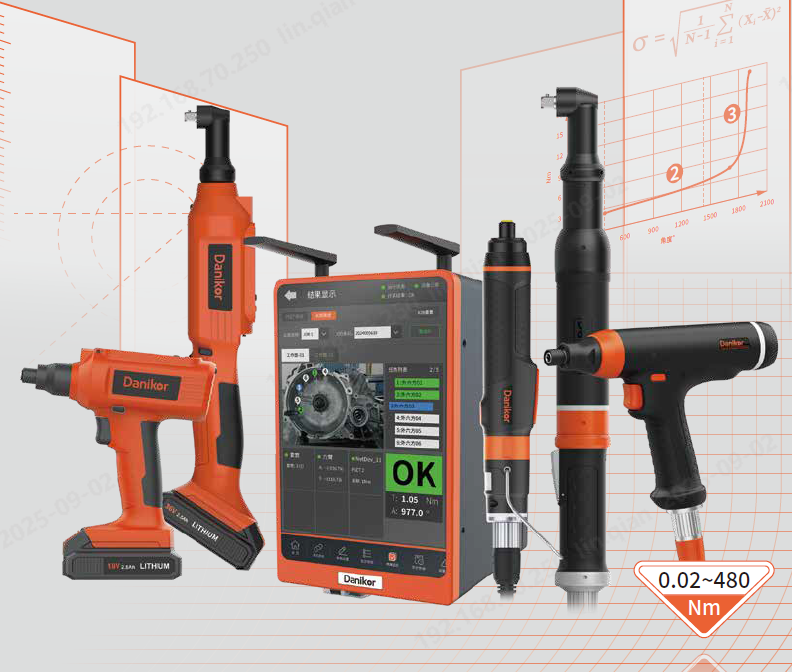
What are the specific impacts of friction coefficient fluctuations on electric tightening spindle operations in various enterprise assemblies?
For various manufacturing enterprises, the impact of friction coefficient fluctuations on electric tightening spindles is direct and prominent, and it is also a common assembly challenge faced by most enterprises. On one hand, in high friction coefficient scenarios (such as construction machinery and heavy equipment assembly where bolt threads are rusty and lubrication is insufficient; hardware processing where thread surfaces are rough), most of the torque output by electric tightening spindles is consumed in overcoming friction at the threads and bolt heads. This easily leads to a situation where "torque meets standards but angle does not meet standards." It appears that tightening is in place, but in reality, the bolt clamping force is insufficient, which can easily lead to loosening and detachment later on, affecting product durability and increasing after-sales costs. On the other hand, in low friction coefficient scenarios (such as electronics manufacturing and precision component assembly where threads are over-lubricated and bolt surfaces are smooth), electric tightening spindles are prone to the problem of "angle meeting standards but torque not meeting standards," resulting in excessive clamping force that may cause bolt thread stripping and workpiece deformation. This not only increases rework costs but also affects product precision, with particularly noticeable impacts on precision assembly scenarios. In addition, unstable friction coefficients can reduce the operational consistency of electric tightening spindles, making it difficult for enterprises to achieve standardized assembly and affecting production efficiency.
What core technology do electric tightening spindles rely on to reduce the impact of friction coefficient?
For various assembly challenges caused by friction coefficient fluctuations, the core and practical solution for electric tightening spindles is the "torque and angle" combined control strategy. This is also the core advantage that distinguishes electric tightening spindles from traditional tightening tools, fundamentally reducing the impact of friction coefficient fluctuations. Among them, Danikor electric tightening spindles perform particularly outstandingly. They adopt self-developed high-level algorithms that upgrade and optimize the "torque and angle" combined control strategy. They can monitor two key parameters in real-time synchronization: torque output and bolt rotation angle. Through built-in intelligent algorithms, they reliably judge the current friction coefficient fluctuations and automatically adjust the operation mode without requiring frequent manual intervention, adapting to the batch assembly needs of various enterprises. This technology has been verified through practical operation in multiple industries, complies with relevant industry standards, and strictly follows advertising law requirements without any exaggerated claims. Danikor electric tightening spindles also rely on this advantage to effectively help enterprises solve clamping force deviation problems caused by friction coefficient fluctuations, improving the operational standards and stability of electric tightening spindles.
How does the "torque and angle" combined control specifically respond to different friction coefficient scenarios?
The "torque and angle" combined control strategy of electric tightening spindles has adaptive adjustment capabilities. It can automatically switch to appropriate modes based on the level of friction coefficient, reliably responding to assembly needs in different scenarios. It is simple to operate and highly practical.
Taking Danikor electric tightening spindles as an example, their equipped adaptive adjustment system performs more reliably when responding to different friction coefficient scenarios: For high friction coefficient scenarios, when Danikor electric tightening spindles are operating, if the preset torque is reached first but the bolt rotation angle has not reached the standard threshold, the tool will not stop immediately but will continue to rotate slowly until the angle meets the preset requirements. At the same time, it monitors torque changes in real-time. If the torque exceeds the safety upper limit, it will immediately alarm and stop to avoid damage to bolts and workpieces caused by over-tightening, ensuring that the clamping force meets standards. For low friction coefficient scenarios, if Danikor electric tightening spindles reach the preset angle first but the torque has not reached the standard threshold, they will continue to work smoothly, slowly increasing torque until both torque and angle fall within the safety threshold, avoiding loosening caused by insufficient clamping force later on.
This adaptive adjustment mode allows Danikor electric tightening spindles to adapt to assembly scenarios with different friction coefficients without manual parameter adjustment, greatly improving operational efficiency while ensuring consistency in every tightening, fully leveraging the reliable fastening advantages of electric tightening spindles.
Friction coefficient fluctuation is an unavoidable problem in electric tightening spindle operations. However, through the "torque and angle" combined control core technology of electric tightening spindles, combined with scientific auxiliary methods, its impact can be effectively reduced. Among them, Danikor electric tightening spindles further amplify the effects of these solutions through self-developed high-level algorithms, excellent adaptive adjustment capabilities, and good adaptability. They can better meet the assembly needs of various enterprises, helping enterprises improve product assembly quality, reduce rework costs, and increase production efficiency. They have become indispensable reliable fastening equipment in industrial assembly and the preferred brand for multi-industry enterprises to solve friction coefficient fluctuation challenges.