In manufacturing assembly workshops, thread slip is undoubtedly one of the most troublesome issues. It not only leads to product rework and increased material loss but may also pose serious safety hazards. Many people simply attribute thread slip to "using too much force," but the failure mechanism behind it is far more complex. This article will delve into the root causes of thread slip and introduce an efficient and reliable prevention solution.
I. What is Thread Slip?
What we commonly call "thread slip" often corresponds to two types of failure modes in engineering:
Thread (or Screw Thread) Fracture: When the axial tensile force applied to the threaded connection exceeds the shear strength of the thread material itself, the thread will undergo plastic deformation or even be completely sheared off, leading to complete connection failure.
Thread (or Hole) Stripping: This usually involves the internal threads (such as those in a nut or a tapped hole on a workpiece) being worn down or sheared off, causing the screw to spin freely without tightening.
Regardless of the type, the result is disastrous: connection failure, assembly failure.
II. Why Does Thread Slip Occur?
Thread slip occurs when the shear resistance of the thread is lower than the actual axial force generated during assembly. So, what causes this imbalance between "capacity" and "demand"? There are typically four core contributing factors:
Off-Axis Assembly (Cross-threading): When the screwdriver bit is not coaxial with the screw, and the screw enters the threaded hole at an angle, the force on the threads becomes extremely uneven. The axial force, which should be evenly borne by all threads, is suddenly concentrated on one side or on a few specific threads. The local stress far exceeds the material's yield limit, causing the threads to break or deform first, triggering a chain reaction and ultimately resulting in thread slip.
Excessive Rotational Speed: When the screw is about to be fully seated (the "seating point"), the rotating parts possess significant inertia. Even if the operator releases the switch immediately, the tool cannot stop instantly. This inertia generates additional torque that can instantly exceed the preset torque range, creating a "torque overshoot" that delivers a destructive impact to the threads already nearing their limit.
Excessively High Torque Setting: To ensure the connection is "tight enough," many operators tend to set the tool's torque upper limit too high. While this practice ensures vibration resistance, it keeps the threads working near or beyond their strength limit. Once there are minor fluctuations in incoming materials or the assembly process, an excessively high torque upper limit can become the final straw that breaks the threads.
Poor Incoming Material Consistency: If the screw or workpiece threads have dimensional deviations, insufficient hardness, surface burrs, or uneven coating thickness, their shear resistance will be significantly compromised. In such cases, even standard assembly processes may lead to thread slip failures.
III. How to Prevent Thread Slip?
To fundamentally solve the thread slip problem, measures must be taken across multiple dimensions such as "People, Machine, Material, Method, Environment." The core lies in adopting more scientific and intelligent tightening methods.
People: Standardize operations to reduce human variability. Implement standardized work instructions, operational training, and raise quality awareness.
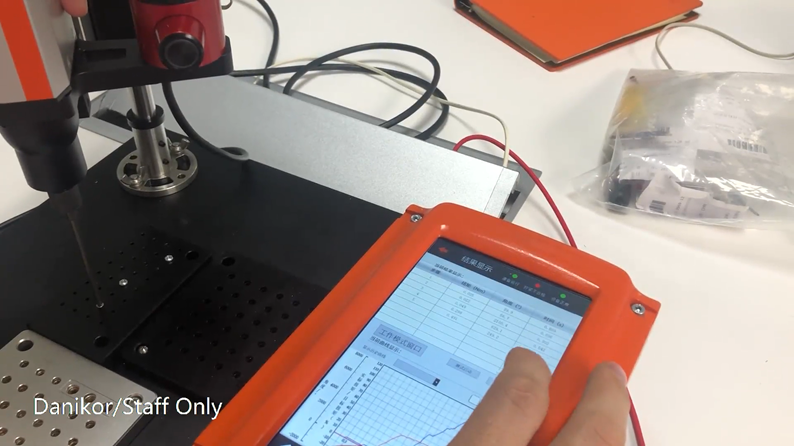
Machine: Select high-precision, intelligent servo electric screwdrivers with thread slip detection functions (torque + angle analysis) to achieve whole-process data monitoring and traceability.
Method: Optimize tightening strategies. Adopt a torque + angle control strategy to identify abnormal thread slip conditions during the tightening process. Collect and store tightening data and curves for subsequent analysis and traceability.
Material: Ensure matching and consistency of bolt materials. Reasonably match the strength of the screw and the material being fastened.
Environment: Maintain a stable assembly environment. Protect critical workstations from dust and oil contamination. Control temperature and humidity to reduce friction fluctuations.
Although thread slip seems like a minor issue, it can affect construction quality and equipment safety. The core reasons are mainly three categories: improper operation, substandard materials, and harsh usage environment, with improper operation being the easiest to avoid. In daily use, selecting the correct screws and tools, standardizing operations, and taking protective measures can effectively prevent thread slip.