What Are the Differences in Tightening Strategies Between Hard Joints and Soft Joints?
In industrial assembly processes, bolt tightening may seem simple, but different joint structures directly affect torque changes during tightening, clamping force stability, and final assembly quality.
In tightening engineering, joints are typically classified as hard joints or soft joints. Due to significant differences in mechanical characteristics during the tightening process, different tightening strategies must be employed to ensure stable tightening quality.
I. What is a Hard Joint?
In tightening engineering, if the tightening angle from the snug point to the target torque is ≤27°, it is typically defined as a hard joint.
This type of joint has the following typical characteristics:
Due to the rapid torque growth rate, the tool's inertia at the target torque can easily cause continued rotation, resulting in torque overshoot.
Under hard joint conditions, if not properly controlled, the following issues may occur:
Torque exceeds the set value
Tightening consistency deteriorates
Thread or workpiece damage
Excessive actual clamping force
II. Tightening Strategy for Hard Joints
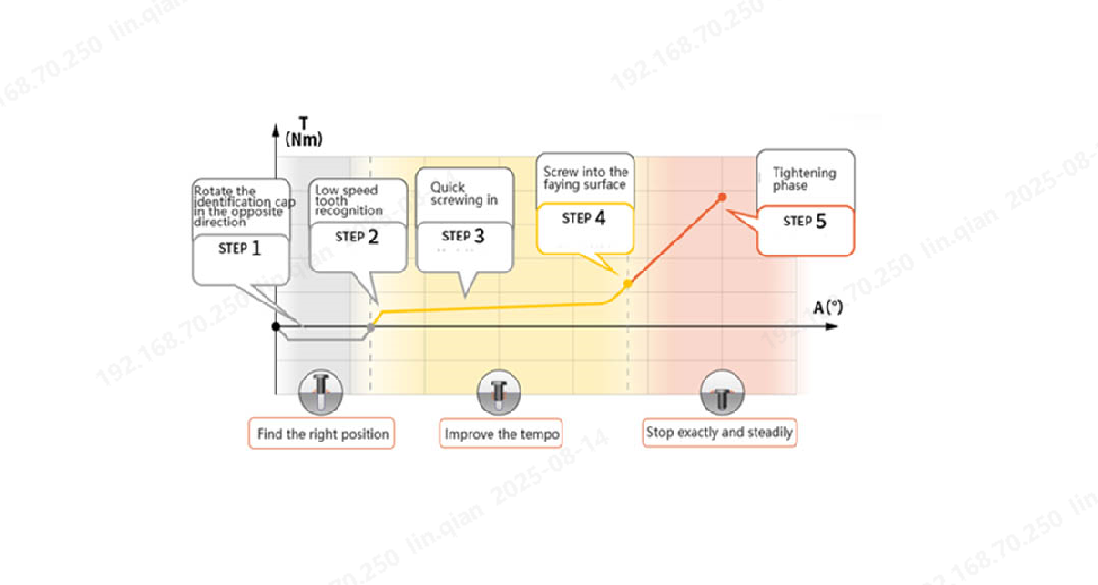
To address the characteristics of rapid torque rise and susceptibility to overshoot in hard joints, a step-by-step tightening strategy is typically employed. High-speed running-in ensures cycle time, while low-speed tightening eliminates inertial effects.
When the screw has not yet contacted or has just contacted the workpiece, the tool runs in quickly at a higher speed.
This can:
Improve assembly efficiency
Shorten production cycle time
Reduce equipment waiting time
When the torque approaches the target value, the tool switches to low-speed tightening.
The low-speed phase can:
Reduce tool inertia effects
Improve torque control accuracy
Avoid target torque overshoot
Through high-speed + low-speed segmented control, both production cycle time and tightening quality can be ensured. This is a common control strategy in hard joint applications.
III. What is a Soft Joint?
When the tightening angle from the snug point to the target torque is ≥650°, it is typically called a soft joint.
Unlike hard joints, soft joints have the following characteristics:
This situation is common in assembly structures containing rubber, plastic, gaskets, or thin sheet metal and other compressible materials.
In soft joints, materials under pressure often exhibit creep or relaxation, leading to:
Torque gradually decaying over time
Actual clamping force falling below the set value
Decreased joint stability
Therefore, even if the target torque is reached during tightening, the actual torque may decrease after a period of time.
IV. Tightening Strategy for Soft Joints
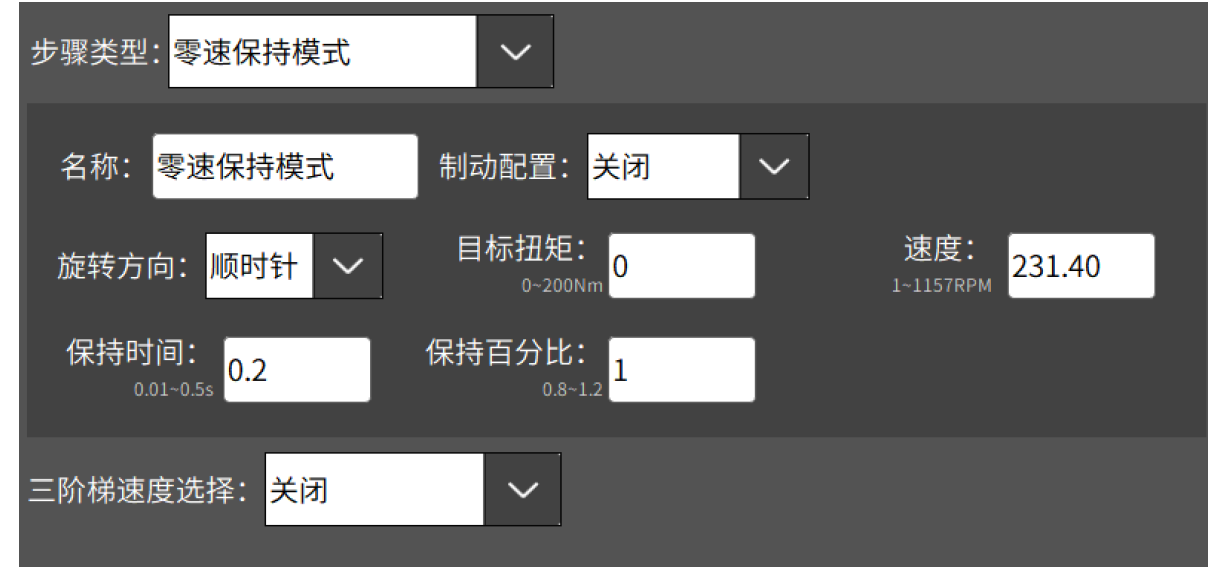
To address the issues of material deformation and torque decay in soft joints, a zero-speed hold strategy is typically employed.
The zero-speed hold tightening strategy ensures that when the tool tightens to the target torque:
The tool does not stop immediately
It maintains continuous driving for a period of time
Allowing the joint material to fully deform and stabilize
This can:
V. Intelligent Tightening Control
In modern intelligent assembly systems, tightening control is no longer just simple torque control, but real-time analysis of joint status through torque-angle curves.
By identifying joint characteristics, the system can:
Automatically match appropriate tightening strategies
Improve assembly consistency
Reduce quality fluctuations
Achieve full-process data traceability
This intelligent tightening control is becoming increasingly important, especially in high-precision assembly scenarios such as new energy vehicles, battery packs, and electronic assembly.
Conclusion
Although both hard joints and soft joints are common assembly forms, their torque growth characteristics and material deformation behaviors are completely different. Different tightening control strategies must be adopted. Combined with high-precision tightening tools, every tightening operation can be made more stable, reliable, and achieve full-process data traceability.